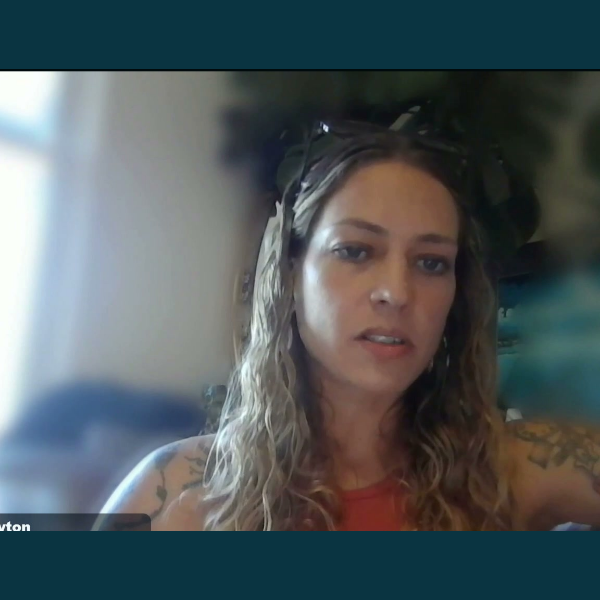
Portrait: Orca Group Series interview still.
The person behind the conversation
Bio & achievements
Hannah Clayton describes her doctoral research in Stanford University’s Goldbogen Lab and her work as a research biologist with Cascadia Research Collective. Her interests include whale physiology, behaviour and resilience, using tags and direct observation to investigate life below the surface.
- Whale researcher using tags and direct observation
- Research experience with Stanford and Cascadia Research Collective
Meet the guest
Hannah Clayton
What can a whale tag reveal?
Hannah Clayton discusses suction cup tags, recordings, movement and the challenge of identifying which whale produced a sound.
The full interview will be linked here when released. Meanwhile, watch an available conversation.
Coming 6 November 2026 at 19:00 · Dublin time
Watch a released conversation while you wait →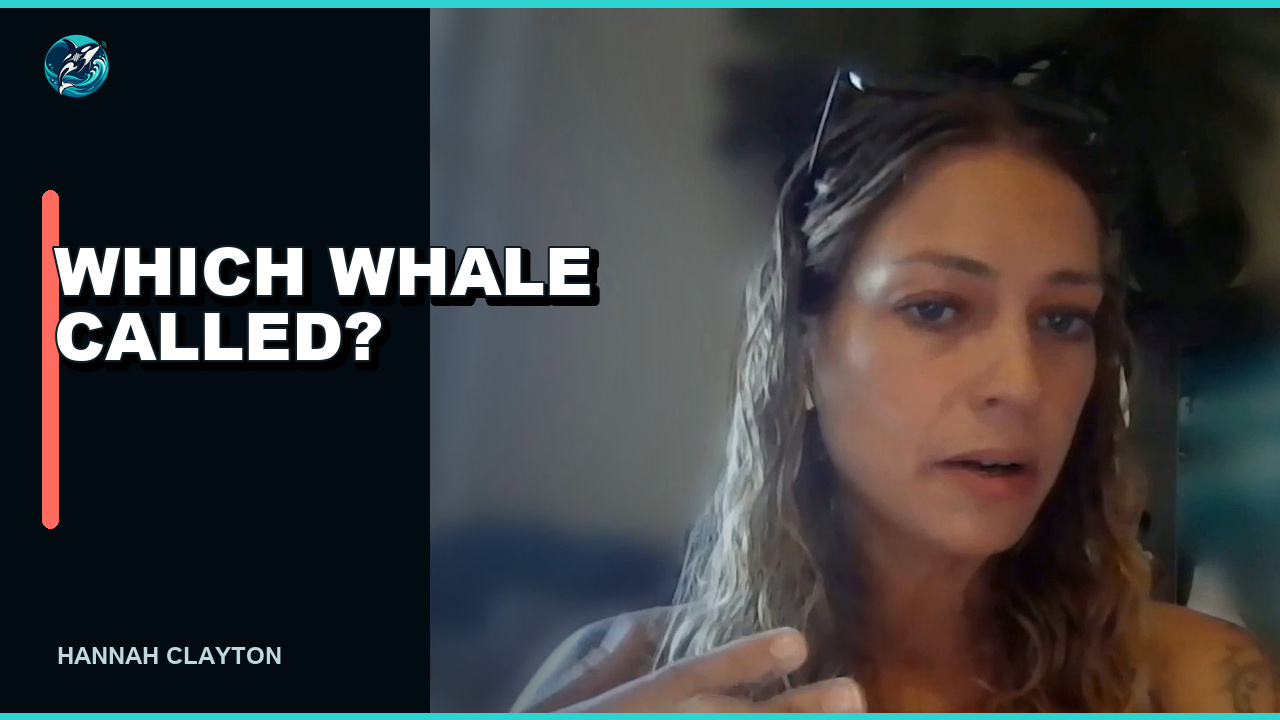
The full interview is not yet available to watch here. Follow the series for release updates.
Follow the series on YouTube ↗Listening to the hidden lives of gray whales
Gray whale sounds
What can a suction cup tag reveal about a gray whale's hidden life? Hannah Clayton explains how acoustic recordings and accelerometers may help researchers distinguish a tagged whale's own calls from nearby sounds, while preserving uncertainty. The conversation also explores the Sounder gray whales of North Puget Sound, very shallow feeding, energetics, resilience and the limits of scaling from individual observations to populations.
Research note: the blue whale efficiency and greater than 4.5 times Arctic effort comparison discussed at 40:12 to 45:30 is Hannah Clayton's preliminary work in progress at recording time. The linked 2026 paper concerns gray whale foraging kinematics and does not validate those energetic comparison results.